Address mismatch signal
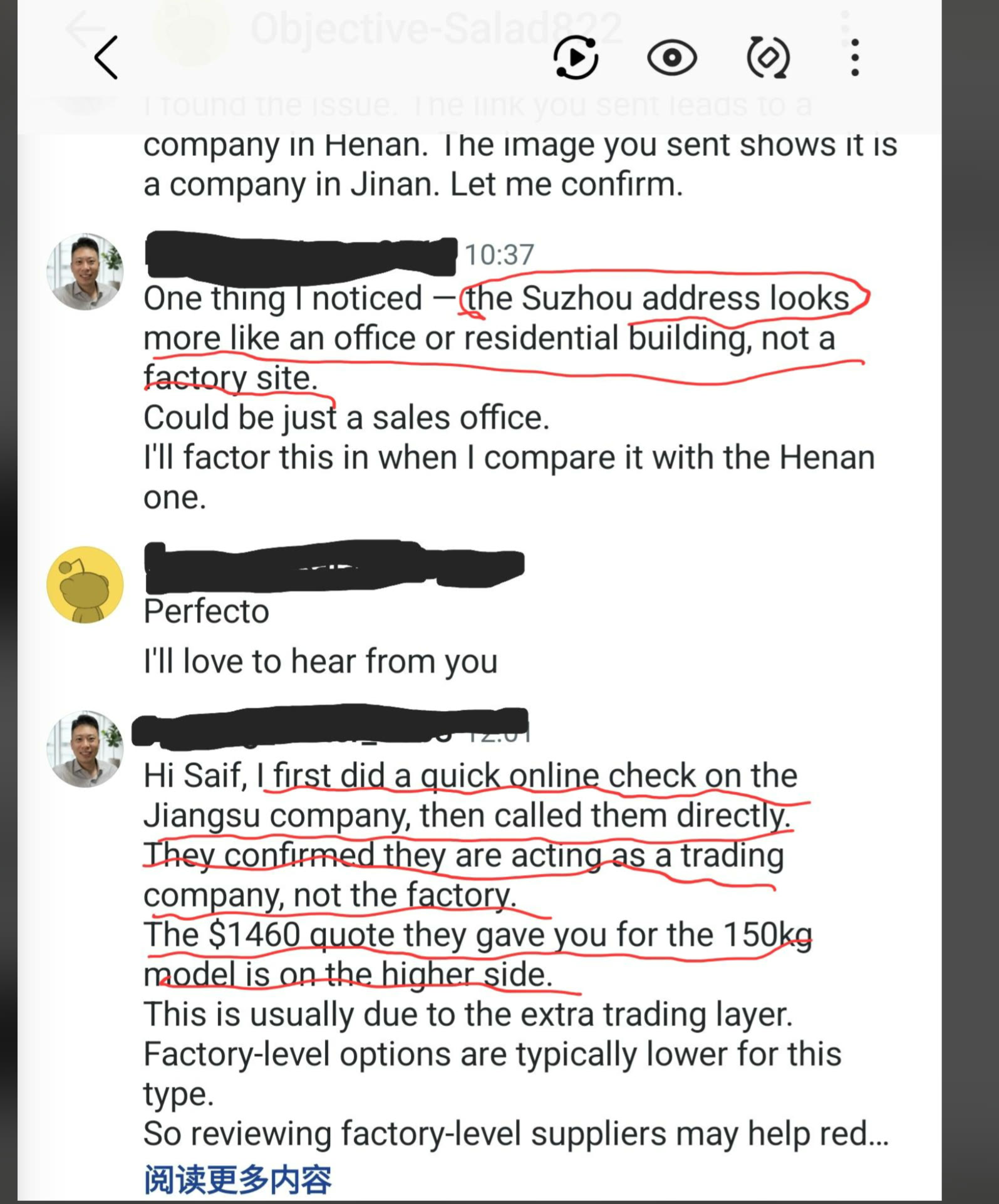
The Suzhou address looked more like an office or residential building than a factory site. That does not prove fraud on its own, but it raises the possibility of a sales office or trading layer.
Case Study
This case started with a sourcing project comparing supplier options for a 150kg model. The first quote looked usable on the surface. A closer check showed the address, company role, and pricing path did not line up cleanly with a factory-level supplier.
Trading-company quote
$1,460
Second market check
$1,400
Factory-level direction
Around $1,200
What was noticed first
The Suzhou address looked more like an office or residential building than a factory site. That does not prove fraud on its own, but it raises the possibility of a sales office or trading layer.
A direct call confirmed the Jiangsu company was acting as a trading company rather than the factory itself.
The $1,460 price was not automatically wrong, but it was on the higher side for the model once the extra trading layer was factored in.
Without verification, you might compare quotes without realizing two of the options were still not direct factory pricing.
How the comparison changed
Why it matters
You could pay a higher quote without realizing the payment is not going directly to the actual factory.
A trading layer can distort information about lead time, customization, and what the workshop can really handle.
Two quotes that look different may still be the same supply path with different markup logic.
You can move forward with clearer expectations, a better comparison basis, and less chance of wiring money blindly.
Next move
Send the supplier link, product type, quantity range, and the main question in front of you. China Partner Hub can review the supplier path and tell you whether the offer looks factory-direct, trading-layered, or worth comparing further.